


A vehicle that tracks steadily to the left, vibrates through the steering wheel, or wears the outside edge of one tire faster than the others has more in common with a minor inconvenience than it appears. Those are common reasons to investigate wheel alignment services, especially after replacing a tire, striking a curb, or noticing a change in how the vehicle handles.
What wheel alignment services actually correct
Wheel alignment services measure and adjust several geometric relationships among the wheels, steering components, and vehicle body. The goal is not to make the tires perfectly parallel to one another. Instead, the technician sets the wheels within the tolerances established for that vehicle so the suspension, steering, and tires work together as designed.
Proper alignment helps the vehicle travel straight, responds predictably, and wears its tires more evenly. It can also reduce steering-wheel vibration and reduce the strain placed on suspension components when a wheel is angled incorrectly. Alignment does not repair a damaged tire, bent wheel, loose joint, or worn suspension part. Those conditions may need attention before the vehicle can be aligned properly.
Some vehicles have fixed or partially adjustable alignment settings. Others allow independent adjustment of front and rear camber, individual toe, and caster. The available adjustments depend on the vehicle’s design, including its suspension, steering linkage, and whether the rear axle uses adjustable components.
| Alignment term | What it describes | Why it matters |
|---|---|---|
| Camber | The inward or outward tilt of a wheel when viewed from the front | Incorrect camber can concentrate tire wear on one shoulder and affect cornering grip. |
| Caster | The fore-and-aft tilt of a steering knuckle or spindle | Caster supports steering stability and helps the vehicle return toward straight-line travel after a steering input. |
| Toe | The inward or outward pointing of the front or rear wheels when viewed from above | Incorrect toe can cause the vehicle to pull, wander, or consume tires unevenly. |
These terms may sound interchangeable, but they describe different geometry. An alignment technician must consider the specifications for each axle rather than adjusting one wheel in isolation. A vehicle can look visually straight from the curb while still having incorrect toe or camber.
Signs that you may need wheel alignment services
The clearest sign is a change in the vehicle’s behavior. If the car no longer tracks the way it did last week, do not assume the problem is simply road surface or tire inflation. A careful road test and tire inspection can reveal whether alignment is a reasonable next step.
| Observed symptom | Possible explanation | What to check |
|---|---|---|
| Vehicle pulls toward one side | Unequal toe or another geometry issue | Compare front and rear tire wear, verify inflation, and test the vehicle on a level road. |
| Steering wheel sits off-center while traveling straight | Toe may not be equal between the two front wheels | Check whether the wheel position is the problem or the steering wheel is simply not centered. |
| Steering-wheel vibration | Out-of-balance wheel, uneven tread, wheel damage, or alignment-related wear | Inspect tires and wheels first because alignment is not the only possible cause. |
| Uneven tread wear | Camber, toe, or repeated hard cornering may be involved | Compare the wear pattern across all four tires and examine suspension components for looseness. |
| Vehicle wanders on a straight road | Toe error, steering looseness, tire pressure variation, or uneven tire wear | Check pressure, tire condition, and steering play before arranging an alignment. |
| Noise or clunk after hitting a curb | A bent suspension part, damaged wheel, or loose component may be present | Have the vehicle inspected before assuming an alignment can correct it. |
Tire wear patterns offer clues, but they are not a substitute for measurement. A tire can wear unevenly because of alignment geometry, but inflation pressure, wheel balance, worn suspension parts, driving habits, and an incorrect wheel installation can produce similar results. If road noise is the main complaint, it may help to distinguish it from vibration before scheduling service. This guide to rattling noise when driving explains how different sounds can point to different vehicle areas.
Immediate reasons to request an alignment
- The vehicle pulls noticeably to one side after a tire replacement, pothole impact, or suspension repair.
- A front wheel has been installed in a noticeably different position from the opposite side.
- The steering wheel no longer centers itself, or the vehicle does not return to a straight path as expected.
- Tire wear is becoming uneven even though pressure, tire age, and wheel balance have been checked.
- Another repair has involved removing a wheel, altering suspension geometry, or replacing a steering or suspension component.
Seasonal temperature changes can also produce temporary changes in vehicle behavior. Cold tires develop less pressure than warm tires, and pressure changes may create steering differences. That does not make every cold-weather pull an alignment problem. A safe process is to check tire pressure and condition, drive the vehicle when it has warmed up, and compare the behavior on a reasonably level road.
How camber, caster, and toe affect handling
Alignment is easiest to understand as a relationship among three main angles. The For additional context, vehicle geometry and primary alignment angles are adjusted within tolerances published for the vehicle. Those tolerances allow for manufacturing variation and normal component wear while keeping the vehicle’s behavior predictable.
Camber and tire contact
Camber describes how a wheel tilts from top to bottom. If the top of a wheel leans toward the vehicle, the wheel has negative camber. If it leans away, the wheel has positive camber. A small amount of negative camber can support cornering performance, but excessive or incorrect camber can reduce the tire’s contact area and wear one shoulder faster than the other.
Camber is especially important on vehicles with independent front or rear suspension. Changing a strut, control arm, ball joint, or subframe can alter the original geometry. Replacing a component with a new part does not automatically restore the correct angle. The technician must measure the completed repair and adjust the components that the design permits.
Caster and steering stability
Caster is generally discussed for the steerable front wheels because it affects how the suspension geometry responds during steering. A vehicle with appropriate caster tends to feel more stable during ordinary driving and may have a stronger tendency to return toward center after a turn. A change in caster can therefore produce a steering response that feels different even when toe is correct.
Rear-wheel-drive, front-wheel-drive, and four-wheel-drive vehicles can all have specific caster requirements. Their steering systems and suspension designs differ, so one vehicle’s settings should not be copied to another. A shop should use the specification for the vehicle’s year, make, model, trim, and relevant configuration.
Toe and straight-line travel
Toe is the front-to-rear alignment of the wheels when viewed from above. If both front wheels point inward, total toe is positive. If they point outward, total toe is negative. Toe matters because small differences have a large effect at the front of a vehicle. Even a modest error across the front axle can create noticeable pulling or require repeated steering corrections.
Toe is not necessarily the same on the front and rear axles. Some vehicles use equal front and rear toe, while others require the rear axle to toe slightly inward or outward so the front wheels can point straight when the vehicle is moving forward. This is why four-wheel alignment is more than pointing the front wheels in parallel.
What happens during a professional alignment appointment
A complete appointment usually includes more than placing sensors on the wheels. The technician needs to verify the vehicle is in a condition that can be measured and adjusted correctly. Although procedures vary by equipment and vehicle design, a typical process includes the following steps.
- Record the concern and inspect the vehicle. The technician should learn whether the driver feels pulling, vibration, wandering, or uneven wear and when those symptoms began.
- Check tires and wheels. Inflation, tread depth, tire size, damage, wheel runout, and wheel balance can affect the readings or reveal a separate problem.
- Inspect visible suspension and steering components. Play in ball joints, tie rods, control-arm bushings, wheel bearings, and other parts can make accurate alignment impossible.
- Position the vehicle on the alignment rack. The vehicle must sit at the correct ride height or be lifted to the required measurement position without altering suspension geometry.
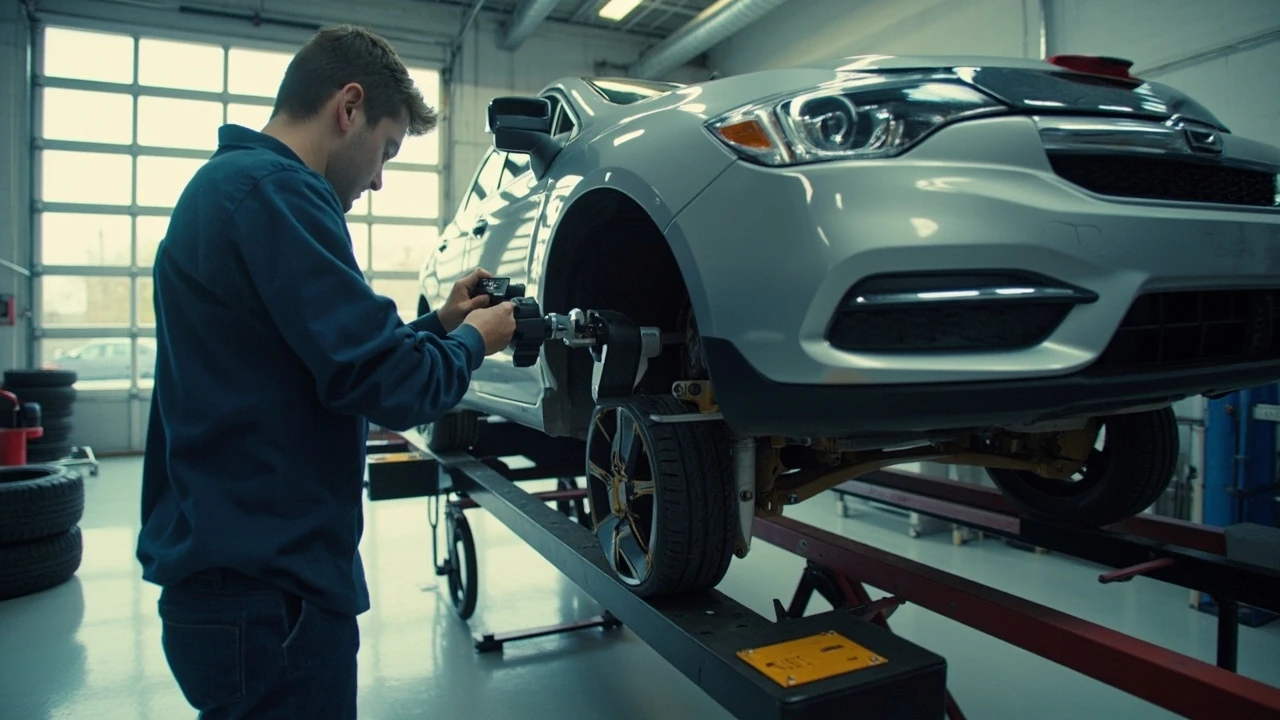
- Measure the current settings. Clamps or sensors attach to each wheel, and the equipment reports the existing camber, caster, and toe values.
- Compare the measurements with the vehicle specification. Values within tolerance may require no adjustment. Values outside tolerance are addressed according to the suspension design.
- Adjust the available components. The technician changes camber, toe, or caster using the designed adjustment points and remeasures after each change.
- Perform a road test and final measurement. A road test helps check straight-line travel, steering feel, vibration, and the absence of new noises. A final printout or digital report records the results.
| Service stage | What the technician is checking | Why it cannot be skipped |
|---|---|---|
| Pre-inspection | Tires, wheels, visible suspension, steering parts, ride height | A loose or damaged component can produce misleading readings and prevent a correct adjustment. |
| Initial measurement | Current camber, caster, toe, and selected ride-height or compensation values | The starting data shows which settings need correction. |
| Adjustment | Factory or otherwise applicable alignment specifications | Correct values are vehicle-specific; copying another vehicle’s settings is not a valid shortcut. |
| Verification | Re-measurement and, where appropriate, road test | Moving one component can affect another, so final readings are necessary. |
Some modern vehicles need additional procedures before alignment. The technician may need to select a specific steering-rack program, calibrate electronic components, measure ride height, compensate for a modified suspension, or use manufacturer-specific software. These additions are not optional extras; they are part of measuring the vehicle accurately when the design requires them.
Why tire condition and suspension condition come first
Alignment equipment can display a number, but it cannot make a bent rim straight or restore a worn joint. If the vehicle has a tire with separated tread, exposed cord, a sidewall bulge, or a severe bulge in the tread, that tire needs replacement or further inspection before driving. A wheel with visible impact damage should also be checked for runout.
Tire pressure deserves attention because it changes the vehicle’s stance and the way each tire contacts the road. The recommended pressures may be listed on the driver’s door-jamb placard, inside the fuel door, or in the owner’s manual. The number on the tire sidewall is a maximum rating in many cases, not the recommended operating pressure for the loaded vehicle.
A routine walk-around can reveal problems that would otherwise be mistaken for poor alignment. Before scheduling an appointment, check:
- All tire pressures, including the spare if the vehicle has one and the spare is intended for road use.
- Tread depth across the full width of each tire rather than only in the center grooves.
- Uneven wear, cupping, feathering, cracks, bulges, punctures, and objects embedded in the tread.
- Wheel edges for curb damage and the wheel face for impact marks.
- Visible fluid leaks, loose fasteners, damaged rubber bushings, or components that appear shifted.
Drivers who are unsure how to make basic checks can also use how to check the oil level in a car without guessing as part of a broader monthly inspection. The connection is simple: routine maintenance gives a shop a better picture of the vehicle before suspension geometry is measured.
Suspension looseness changes the meaning of an alignment reading. A worn tie-rod end or control-arm bushing may move during driving, creating instability that no static alignment can permanently correct. If a component must be replaced, the vehicle may need an alignment afterward because removing or loosening it can disturb the original settings.
What a vehicle owner can check before the appointment
Some alignment checks can be done safely at home, but an owner should know where the line between observation and diagnosis falls. A driveway can reveal obvious tire wear and wheel condition. It cannot produce reliable camber or caster measurements without purpose-built equipment and a level measurement environment.
Useful preparatory steps include:
- Photograph the existing tires. Images of all four wheels can help document uneven wear and give the technician a record of the complaint.
- Check cold tire pressure. Inflate each tire to the vehicle’s recommended pressure and note any tire that loses air unusually quickly.
- Inspect the steering wheel position. On a level, straight road, note whether the steering wheel is centered and whether the vehicle requires a constant correction.
- Look for physical damage. Curb strikes, potholes, and impact damage deserve attention before an alignment appointment.
- Record when the issue occurs. Distinguish a low-speed pull from vibration at highway speed or a problem that appears only during braking.
Do not use an app or a length of string as the sole basis for adjusting toe. Consumer applications cannot reproduce the calibrated sensors, level rack, exact ride height, and vehicle-specific compensation used by an alignment technician. They may help document a symptom, but they are not a substitute for a final measurement.
It is also reasonable to ask whether a diagnosis is needed before the full alignment. A good service process separates inspection from correction. If a damaged wheel or worn suspension component makes alignment impossible, the technician should identify that issue rather than adjusting the vehicle until the numbers look acceptable while the underlying defect remains.
How to choose a wheel alignment provider
A low advertised price does not tell you what is included. Compare the service description, equipment, technician process, and final documentation. The provider should be able to explain which settings apply to the vehicle, which components are adjustable, and what conditions could prevent the vehicle from holding the specifications.
| Provider feature | Why it matters | Question to ask |
|---|---|---|
| Vehicle-specific specifications | Alignment values differ between models and configurations. | How do you obtain the correct settings for my exact vehicle? |
| Pre-alignment inspection | Tire, wheel, and suspension condition can affect the result. | Do you inspect for visible damage and looseness before measuring? |
| Full-vehicle measurement | Front and rear geometry work together. | Will all four wheels be measured when required for my vehicle? |
| Final report | A report provides before-and-after values and shows whether corrections were needed. | Will I receive the final measurements? |
| Post-adjustment road test | It helps confirm the vehicle’s straight-line behavior after corrections. | Is a road test included when safe and appropriate? |
| Clear responsibility for separate repairs | Some issues require parts or work beyond alignment adjustment. | Will you identify problems that require separate repair before proceeding? |
Ask what happens if the vehicle cannot be brought into specification. A reasonable explanation may involve a bent suspension part, an adjustment point that is seized or missing, limited adjustment range, or damage that must be repaired. The shop should distinguish an alignment correction from a mechanical repair and obtain authorization before exceeding the requested service.
Also ask whether the shop handles the vehicle’s configuration correctly. Four-wheel drive, sport-tuned suspension, lowered vehicles, modified trucks, and vehicles with aftermarket components may require special procedures. If a vehicle has been modified, the shop needs to know before it begins. The original factory specification may no longer represent the intended setup.
How to maintain alignment after service
Alignment is not permanent protection against every handling change. New tire wear, a wheel impact, suspension wear, or another collision can disturb the geometry. Keep an eye on the symptoms that brought the vehicle to the shop and avoid assuming that every new vibration comes from the alignment work.
Useful maintenance practices include:
- Check tire pressure on a regular schedule and follow the vehicle manufacturer’s pressure recommendations.
- Rotate tires when appropriate for the tire pattern and the vehicle manufacturer’s guidance.
- Keep tires properly inflated and replace them when the tread or structural condition reaches the end of its useful life.
- Avoid striking curbs or potholes when a safe alternative is available, especially with low-profile tires or modified suspension.
- Inspect tire wear at regular intervals so a developing geometry problem is noticed before one side wears down significantly.
- Return to the shop if the original pulling or steering behavior returns instead of simply resetting the warning signs in your mind.
After alignment, the vehicle may feel different because its previous behavior was involving uneven wear or a constantly corrected steering position. That improvement is not a substitute for a test drive. If the vehicle pulls, vibrates, wanders, or feels unstable after the service, ask the technician to review the final readings and inspect for separate causes.
Some symptoms deserve a broader diagnostic inspection rather than an immediate alignment order. A clicking sound during startup, for example, points toward a starting-system issue rather than wheel geometry. This guide to a clicking sound when trying to start a car helps distinguish that type of symptom. Matching the complaint to the correct system prevents unnecessary work and keeps the repair focused.
Finally, retain the alignment report and note any parts replaced. If tire wear becomes uneven again, the report can help the next technician understand what was measured before. Record the mileage, the date, and any visible symptoms that prompted the visit. That information is more useful than assuming the vehicle’s handling will remain unchanged indefinitely.
Frequently asked questions
How often should a vehicle receive wheel alignment services?
There is no single interval that suits every vehicle. Many drivers arrange alignment after noticeable pulling, steering-wheel centering issues, uneven tire wear, a curb strike, a pothole impact, or work involving the steering and suspension. Vehicles used for towing, frequent highway travel, or repeated sharp turns may warrant more frequent tire and alignment checks. Following the vehicle manufacturer’s maintenance guidance and watching tire wear are more useful than relying on a universal mileage figure.
Does a wheel alignment fix tire wear?
Alignment can correct uneven wear caused by incorrect camber or toe, but it cannot reverse wear that has already occurred. A tire with an uneven profile may continue to behave differently until it is replaced. If the original problem was not corrected, new tires can wear unevenly again. The technician should inspect the tire pattern, measure the geometry, and explain whether replacement is needed.
Can I drive with misaligned wheels?
Driving is often possible with a modest alignment error, but it should not be assumed to be safe without inspection. Significant pulling can force constant steering corrections, and uneven tire wear may reduce available performance. If a tire is damaged, separated, badly uneven, or a wheel or suspension component is loose or bent, the vehicle should not be driven until the concern is evaluated. Avoid a long trip until the vehicle’s condition has been checked.
Does wheel alignment require all four wheels to be measured?
Four-wheel alignment is the standard approach for many modern passenger vehicles because front and rear settings interact. Some designs still use a two-wheel alignment procedure for specific models, and the appropriate method depends on the vehicle’s suspension and manufacturer requirements. A provider should know which procedure applies and should not assume that aligning only the front wheels is sufficient for every vehicle.
Why does my steering wheel look crooked after alignment?
A crooked wheel can result from incorrect toe, an off-center steering-wheel position, a steering-wheel adjustment that was not reset, or a separate issue. During a proper procedure, the technician should verify that the steering wheel is centered while the wheels are straight and that the final vehicle behavior matches the measurements. If the condition remains, the shop should recheck the setup rather than assuming the alignment is complete.
Can a shop align wheels on a lowered or modified vehicle?
Alignment is possible when the shop has the correct equipment, data, and understanding of the modification. The suspension’s ride height, weight rating, components, and intended handling setup can affect the required measurements. The provider must know about the modification before work begins. Using the original specification without accounting for a changed suspension can produce a mathematically precise result that does not suit the vehicle.
Should I replace tires before or after wheel alignment?
The best sequence depends on the condition of the tires and the shop’s inspection findings. Replacing severely worn or damaged tires first prevents the old tire profile from interfering with measurements and gives the new tire a proper baseline. In other cases, the technician may need to complete a mechanical repair or alignment adjustment before the correct replacement set can be installed. Ask for the tire and alignment scope together so the work is not performed twice unnecessarily.
What is the difference between wheel balancing and wheel alignment?
Wheel balancing addresses weight distribution around a wheel. Alignment addresses the angles of the wheels and suspension relative to the vehicle. A wheel can be perfectly balanced yet misaligned, or aligned correctly while carrying a wheel that needs balancing. Vibration often prompts balancing, while pulling, wandering, or uneven tread wear prompts an alignment check. The symptoms help determine which service is appropriate.
How long should an alignment take?
The time required varies with the vehicle, the condition of its suspension, the equipment used, and whether parts or additional repairs are needed. A routine appointment may be brief, while a vehicle with an alignment issue that requires suspension work can take longer. A shop should provide a time estimate after inspecting the vehicle and should explain any delay before continuing.
What should I ask for after the alignment?
Ask for the final before-and-after measurements for the vehicle’s adjustable settings, along with any notes about parts or adjustments that could not be completed. If the vehicle pulled or vibrated when it arrived, describe that behavior during the post-service road test. Keep the report with the service invoice and record any tire replacement or suspension repair performed at the same time.


Leave a Reply