



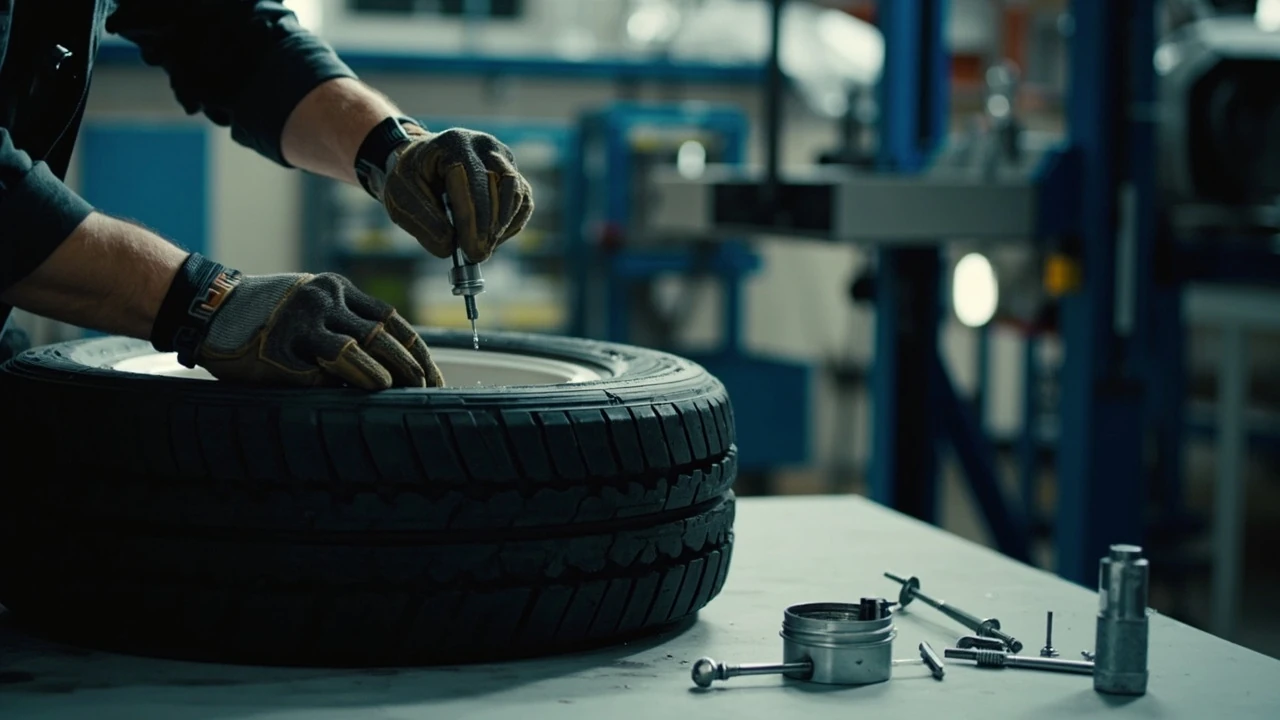
Tire patch cost: what drivers should expect
A nail, screw, or piece of road debris can leave a puncture that looks small enough to ignore, yet the price of repairing it depends on more than the size of the hole. Tire patch cost varies according to where the puncture is located, what caused it, the condition of the tire, and whether the wheel can be removed safely. A basic shop repair may cost less than replacing the tire, but a patch is not automatically the cheapest or safest option.
The first question is not simply, “How much is a tire patch?” It is, “Can this tire be repaired safely, and what work does the quote actually include?” A useful comparison should separate the tire repair from related services such as plugging the tire from the outside, removing and refitting it, balancing, road-force testing, or replacing a damaged tire.
Keep the original receipt and the details of the incident. If the tire was damaged after driving over a pothole, curb, or other obstacle, the visible puncture may be only one part of the problem. The tire could also have a cut, bulge, bead damage, broken belt, or a wheel that is out of alignment. A repair quote should account for those possibilities rather than guaranteeing that the original air loss came from the object lodged in the tread.
Most drivers start comparing a quick tire-shop plug with a full inspection. That comparison makes sense, especially for a tread puncture found before the tire loses pressure. The shop may remove the tire, inspect its interior, install an internal repair if appropriate, and check the wheel for leaks or damage. If the tire cannot be safely repaired, the quote should explain why and show what a replacement would involve.
What determines the price of a tire repair
Tire patch cost is rarely a single fixed national price. Shops charge according to labor time, the repair method, local labor rates, and the condition of the tire. A puncture in the tread may qualify for a permanent repair. Damage near the shoulder, on the sidewall, through the belt, or around the bead often requires replacement because the tire can no longer retain air safely.
The type and location of the injury matter more than most drivers expect. A small object in the center of the tread can usually be removed and the opening sealed from inside. A puncture near the edge of the tread may have less margin between the injury and the sidewall. Repeated punctures in the same area can also weaken the tire beyond what a single repair should address.
| Repair factor | What the shop checks | Effect on the quote |
|---|---|---|
| Puncture location | Whether the hole is in the tread, shoulder, sidewall, or bead area | A tread injury is generally easier to repair; sidewall or bead damage usually means replacement. |
| Injury size and shape | Hole diameter, length, angle, cuts, and evidence of a broader impact | A clean, small hole may need a standard plug-and-patch repair, while a larger or irregular injury may require more work. |
| Tire condition | Remaining tread, age, prior repairs, bulges, cracking, and belt condition | A worn or damaged tire can be disqualified even when the puncture itself looks repairable. |
| Wheel condition | Cracks, bends, corrosion, valve damage, and bead seating | A separate wheel repair or replacement may be necessary. |
| Removal method | Whether the tire can be removed normally or requires special equipment | Limited clearance, wheel locks, or a wheel that will not separate can increase labor. |
| Additional services | Balancing, road-force testing, alignment, or a replacement tire | These items should appear separately so the driver can compare them with another quote. |
Ask whether the quoted work includes a leak test, tire balancing, and a check for slow leaks. Some inexpensive advertised repair prices cover only the plug itself. Others cover a complete remove-and-reinstall service. Without knowing the inclusions, two quotes can look very different even when the repair itself is the same.
Location also affects labor. A shop with a full tire room may be more efficient than a general repair facility that removes the wheel outdoors or sends it to another location. Highway service and roadside assistance may charge a call-out fee or premium for emergency work. Those charges are separate from the repair price and should be identified in advance.
Patch, plug, or replace: compare the options before paying
A plug and a patch are often discussed as if they are interchangeable, but they serve different purposes. A plug can stop an immediate leak in many tread punctures. An internal patch-and-plug combination can seal the liner and the injury path from inside the tire. Some shops use one method, while others offer both. The tire manufacturer’s recommendations and the technician’s inspection should guide the choice.
A temporary spare, sealant, or an externally applied plug may be useful for getting home or completing a short trip. It should not be confused with a permanent repair when more distance remains. Driving on a compromised tire can damage the tire, wheel, or suspension and make the eventual repair more expensive.
| Option | Best use | Main limitations | Questions to ask |
|---|---|---|---|
| Permanent internal repair | A clean puncture in a serviceable tread area | Not suitable for every sidewall, bead, or large-diameter injury | Is the tire mounted, removed, inspected from the inside, and leak-tested? |
| External plug or sealant | Short-term emergency stabilization | May not seal every injury and is not always a permanent repair | Is this intended as a temporary fix, and is the tire safe to drive at highway speed? |
| Tire replacement | A non-repairable injury, worn tread, or an unsafe tire | Usually the higher-cost option and may require balancing | Is the replacement tire the same or an acceptable equivalent specification? |
| Wheel or suspension repair | Impact damage beyond the tire itself | Requires diagnosis beyond the puncture inspection | What specific measurements or failed parts support the recommendation? |
Do not let a discount influence the safety decision. Replacing a tire that could have been repaired may waste money, but repairing a tire that should be replaced can leave the vehicle unsafe. The defensible middle ground is a documented inspection: the technician should identify the injury, explain its location, recommend a repair or replacement, and identify any reason the tire is not repairable.
A written quote should clarify whether the technician is charging for one or both parts of a permanent repair. Ask for the repair-plug size and type, the labor charge, any balancing fee, and the disposal or shop supplies. For a replacement, compare the tire brand, model, size, load index, speed rating, and warranty rather than looking only at the sticker price.
Why a small puncture can lead to a larger bill
The lowest tire patch cost may be discovered only after the tire is off the vehicle. A shop needs to inspect the interior because the visible hole is not always the full source of the leak. A hidden nail can remain embedded in the tire, sealant may conceal another opening, or a repaired area may show evidence that the tire was previously run underinflated.
The most common causes of an unexpected cost are not necessarily the puncture itself. They are the condition of the tire, the wheel, the valve, and the vehicle’s alignment. Understanding these distinctions helps prevent a driver from comparing a basic plug with a full diagnostic service.
- Sidewall or shoulder damage: A puncture close to the sidewall may have insufficient material between the injury and the edge of the tread. The technician may recommend replacement rather than risk a repair that cannot retain air.
- Impact damage: Driving over a pothole or curb may split a sidewall, damage a wheel, or break a belt. The BBC report on pothole damage describes examples involving punctures, wheel damage, and suspension repairs.
- Underinflation damage: Driving on low air pressure can damage the tire’s internal structure even when the tread still looks present. A tire with unusual wear, cracking, or a bulge may not be repairable.
- Repeated punctures: Several repairs in the same region can indicate a continuing problem, such as exposed hardware, a sharp object lodged in the tread, or a wheel that needs correction.
- Non-sealing objects: Some repair procedures are not appropriate for a large valve core, a full-ring repair, or a previously repaired area.
Wheel damage is another reason the initial quote may change. A tire can lose pressure because of a faulty valve or an unseated wheel, not because the tire itself is punctured. The tire should not be mounted on a wheel that is cracked, severely corroded, distorted, or unsafe to clamp. A technician who claims the wheel needs replacement should be able to point to the specific condition.
Ask for an explanation in plain language: what failed, how it was confirmed, and what happens if only the immediate issue is repaired. This is especially important if a tire shop also performs suspension work or if the vehicle has unusual steering, vibration, or braking behavior.
When to replace rather than patch the tire
Not every puncture belongs in a repairable category. The puncture’s location is only the first consideration. The tire must also have enough usable tread, no disqualifying structural damage, and no indication that it has been operated dangerously. A shop that follows the tire manufacturer’s repair limits should refuse work that does not meet them.
Do not agree to a repair when the technician cannot clearly identify the puncture location. If the wheel is removed and no injury is found, the source of the leak may be the valve, the wheel, or a bead-seating issue. That diagnostic step is important, but it should not become a vague excuse for an expensive replacement. Request a specific finding and, where practical, ask to see the inside of the tire before it is reassembled.
- The puncture is in the sidewall or at the bead rather than in repairable tread.
- The opening is unusually large, long, irregular, or located near a previous repair.
- The tire has a bulge, visible belt separation, cracking, exposed cords, or severe wear.
- The tire was run substantially underinflated or driven over a major impact.
- The tire does not meet the manufacturer’s repair criteria.
- The wheel is bent, cracked, badly corroded, or otherwise unsafe.
Tire age is not a reason by itself to replace a tire, but age can make the condition assessment more important. Sidewalls can develop fine cracks, and an older tire may be more vulnerable to impact damage even if it has acceptable tread depth. A technician cannot judge the entire condition from a photograph or a glance at the tread.
If a replacement is necessary, compare more than the tire price. The quote should identify whether balancing is included, whether an alignment is recommended, and whether the shop is replacing the damaged tire alone or with another tire on the same vehicle. A wheel or suspension correction can change the outcome, so separate tire price from vehicle repair work in your records.
DIY tire repair versus professional service
Products sold for temporary tire repair can be useful in limited circumstances, but they do not turn an unsafe tire into a permanent repair. A driver who changes a tire on the roadside needs to inspect the object and the surrounding tread, remove it if appropriate, verify that the tire is holding air, and continue to monitor it. A plug applied without removing the tire may not reveal the full injury.
Driving to a repair shop after using temporary sealant can complicate the job. Some products leave residue inside the tire that the technician must clean out. If the tire has lost substantial pressure, the shop may need to inspect for rim damage or run-low evidence. Tell the technician what was used, whether the tire was driven underinflated, and how far the vehicle traveled.
A do-it-yourself approach is most defensible when the injury is small, clearly in the tread, and the tire is being prepared for a short trip to a capable repair facility. It is not a substitute for a permanent repair when the tire will be used normally afterward. Temporary plugs and inflators should not be presented as equivalent to an internal inspection and patch.
Professional service offers advantages that are difficult to reproduce at the roadside: controlled removal, inspection of the inner liner and tire body, accurate placement of a repair, a leak test, balancing, and a better assessment of why the tire failed. Those steps explain why a complete tire patch cost can be higher than the price advertised for a plug-in repair.
Before leaving the shop, ask the technician to explain the repair, what caused the leak, and what signs to monitor. If the tire was repaired, the vehicle should feel normal after reinstallation. Continued pulling, vibration, or a pressure loss means the driver should return promptly rather than continue using the tire.
How to compare repair quotes without missing the details
Get enough quotes to compare the work, not merely the advertised price. A meaningful quote needs the tire size, the repair or replacement choice, labor, parts, taxes, and any additional services. If a shop cannot provide those details over the phone, ask for a written estimate after the tire has been inspected.
One practical approach is to request the same information from each shop. Ask whether the quote includes removal and reinstallation, inspection, a permanent internal repair, leak testing, and balancing. If one quote includes road-force testing or alignment, determine whether that is necessary for the vehicle or simply part of a bundled service.
- Describe the symptom accurately. Say whether the tire is flat, slowly losing pressure, or has a visible object in the tread. Report any impact, severe underinflation, or sudden noise.
- Ask for the scope of the initial inspection. Establish whether the quoted amount is a diagnostic fee, a repair price, or an estimate that assumes the tire can be repaired.
- Compare like with like. Match repair against repair or replacement against replacement, including the same balancing and diagnostic services.
- Request the itemized total. Separate labor, repair parts, replacement tire, wheel service, balancing, alignment, disposal, and taxes.
- Ask about warranty documentation. Get the invoice to show the repair method, tire identification, and any warranty offered on the work or replacement.
- Clarify the safety recommendation. If the shop recommends replacement, ask which observed condition makes the tire ineligible for repair.
A low tire patch cost can still be a poor deal if the quote omits the labor needed to remove the tire. Conversely, a higher quote that includes a full inspection, balancing, and a documented repair may offer better value than a smaller job that leaves the cause unknown.
Before driving away, inspect the invoice and the vehicle. Confirm that the wheel is properly seated and the lug nuts are tightened in the correct sequence. If the repair involved a wheel, check that the wheel looks centered and that the tire spins without an obvious rubbing condition. A shop should also verify that the repaired tire is holding air under normal conditions.
For broader maintenance checks around the incident, see our guide to checking the oil level without guessing. While it is not part of the puncture repair, keeping fluid levels correct helps prevent separate problems during the same service visit.
What to do after a tire is patched
A successful repair should include more than the tire holding air for a short drive. Before returning to normal use, confirm that the shop has checked for leaks, balanced the tire if required, and addressed any wheel or tire issue that could cause the failure to repeat. Review the invoice to make sure the work matches the discussion.
Monitor the repaired tire during the first several drives. Pay attention to the tire pressure, steering feel, vibration, and any new sound from the road wheel. Do not ignore a gradual pressure loss, even if the tire still feels firm. A tire that loses air quickly should be inspected again, because the original repair may not be the only leak.
Check the pressure using the recommended method for the vehicle and compare it with the information on the driver’s door jamb or owner’s manual rather than a number printed on the tire sidewall. If the driver must add air, understand that the reading can change with temperature. A tire checked immediately after driving may read several units higher than the same tire measured when cold.
Keep the repair invoice with the vehicle records, especially if a tire is repaired again later. It can help the next technician understand what was done and where. It also makes it easier to evaluate a repeated failure instead of treating every puncture as an unrelated event.
If the vehicle begins making a clicking sound when trying to start, that is a different warning sign and should not be dismissed as a tire issue. Our guide to a clicking sound when trying to start a car explains the common causes and the appropriate next checks.
Do not continue driving on a visibly damaged tire, even if the puncture has been sealed. A bulge, exposed cord, torn sidewall, severe impact, or rapidly falling pressure calls for stopping safely and arranging qualified assistance. The purpose of a tire patch cost comparison is not only to spend less; it is to avoid turning a modest repair into a larger safety or vehicle-damage problem.
Frequently asked questions
How much does it cost to patch a tire?
The price depends on the repair method, puncture location, tire condition, shop labor rate, and whether removal, balancing, or other services are included. A quick plug and a complete remove-inspect-repair service are not directly comparable. Request an itemized quote that states exactly what the tire patch cost covers, including labor, repair parts, taxes, and any additional services.
Is it cheaper to patch a tire or replace it?
A repair is usually less expensive when the tire has a clean, small tread puncture and remains in serviceable condition. Replacement is generally the only acceptable option when the damage is on the sidewall or bead, the tire has structural damage, or it no longer meets repair and tread requirements. Comparing the two choices should be based on safety and remaining tire life rather than price alone.
Is a plugged tire safe to drive on?
It depends on the repair. A temporary external plug may be suitable for a short trip, while a permanent internal patch-and-plug repair can be appropriate for a tread puncture. A tire with sidewall damage, a bulge, exposed cords, a major impact, or a bead-area puncture should not be driven on. Ask the shop whether the repair is temporary or permanent and what conditions limit its use.
Why did the tire shop charge more than the advertised patch price?
The advertised price may cover only a plug-in service. A shop may also charge for removing and reinstalling the wheel, inspecting the tire, testing for leaks, balancing, or replacing a damaged wheel. The tire may have been found ineligible for repair. Ask for an itemized invoice and a clear explanation of any work that changed the original estimate.
Can a tire with a sidewall puncture be repaired?
Sidewall punctures are generally excluded from repair because the sidewall is a flexible but structurally important part of the tire. A repair near the shoulder may also be restricted because it leaves little margin between the injury and the sidewall. The technician should inspect the removed tire and explain whether the injury meets the manufacturer’s repair criteria.
Should I replace both tires if one is punctured?
Not automatically. If the other tire has acceptable tread, no structural damage, and a sound repair history, replacing only the damaged tire may be reasonable. However, tires on the same axle should generally have compatible size, construction, wear level, and performance capability. If one tire is much older or has uneven wear, replacing both may improve consistency.
Can I drive to a tire shop after using temporary sealant?
Sometimes a short, slow drive to a repair facility is appropriate after a proper temporary repair, especially when the injury is in the tread and the tire remains seated. It is not appropriate with sidewall damage, a bulge, severe underinflation, or a visibly compromised tire. Tell the technician what product was used and how far the vehicle was driven because the residue may need to be cleaned before a permanent repair.
What should a tire repair receipt include?
The invoice should identify the vehicle and tire, describe the repair or replacement performed, list labor and parts, and show any balancing, diagnostic, or related service. For a repair, the documentation should also include the repair method and any warranty offered. Keep these records because they can help a future technician evaluate the tire if it loses pressure again.
How do I know a tire shop is recommending replacement for a valid reason?
Ask the technician to identify the injury’s location, size, and condition, along with the tread and structural findings. A sound recommendation refers to observable conditions, not simply the fact that the tire is old or that replacement is the shop’s preferred service. You should be able to see a clear connection between the damage and the recommendation.


Leave a Reply